

Sneakers aren’t just something you put on your feet but they are more than that, they are a lifestyle and if you’re reading this then you know that the sneaker world or sneaker culture wouldn’t exist if it wasn’t for Michael Jordan.
This is the story of how Jordan Brand came into existence and changed & fused sports i-e basketball and fashion. In 1984, Michael Jordan was preparing to enter the NBA and Nike wasn't his first choice. Nike at the time was known as a company for running shoes and it needed someone to break through.
Nike had to convince MJ that they would build something around him that would turn out to be bigger than a normal endorsement deal.
Guess what? It worked and it worked in an era defining way.
This is how it all began, and what followed was the beginning of air jordan history and eventually, the creation of one of the biggest names in sneakers.
However, the interesting part isn't that Michael Jordan got his own shoe but how those sneakers went from basketball equipment to something people wore on the streets, collected, talked about and built entire fits around.
Today, we’ll talk about how the Jordan story really came together.
It All Started With a Risk on Michael Jordan
Michael Jordan entered the NBA as the third overall pick in the 1984 draft, joining the Chicago Bulls. It was clear Nike wanted him, but he was skeptical, however, Jordan’s agent David Falk pushed him to at least hear Nike out.
Fun fact, it was actually Falk who coined the term “Air Jordan”.
Nike were desperate and they needed someone to breakthrough, and so they decided to do something unreal and unusual, something never seen before.
They took a gamble and decided to offer Jordan a partnership where he could have his own signature line, products built around him and a deal which included royalties, giving MJ a financial interest with the success of the line.
At that time Jordan hadn't even played a single NBA game, let alone an entire season. No one exactly knew how his career was going to unfold.
But the gamble paid off big time!
It was in 1985, when Air Jordan 1 hit the market. It was designed by Peter Moore with an original retail price of $65. These kicks weren’t the usual safe looking, traditional basketball sneaker that you would expect from a rookie's first signature model but it had the black, red and white colorway which made it instantly stand out.
This is where it all began, it was just the start and Nike wasn't finished.
The Air Jordan 1 and the “Banned” Story
Almost every story has some sort of controversy, air jordan history does have that too. It is inarguably the part which almost every sneaker fan has heard about but it gets a little more interesting.
The colorway of black and red sneakers created problems with the NBA's uniform rules but it was actually Nike Air Ship that first attracted the league's attention during the 1984 preseason. Those kicks were basically a pre-Air Jordan model that MJ wore before the AJ1 were even released. And that is the reason why, because of those kicks the Air Jordan 1 later became tied to the same controversy.
Nike capitalized on this and used it to create one of its most memorable marketing campaigns of all time. This is from where the famous “Banned” story comes from and Nike showed its genius by not wasting the controversy but turning the idea of a sneaker being too different for the NBA into a selling point.
What Nike actually did was make the sneaker look rebellious instead of making it look like a problem. They completely controlled and changed the narrative which began to associate with MJ’s attitude, ability on the court and the notion of standing out rather than fitting in.
Now you know why the Air Jordans have always been different from the beginning and it is because they already started with a story.

Jordan 1 OG ‘Chicago’ (1985)
Image: GOAT
Tinker Hatfield Changed Everything
We all know that it was Air Jordan 1 that started the line but it was the Air Jordan 3 that actually helped establish what Jordan sneakers would go on to become thanks to the design by Tinker Hatfield.
In 1988, Tinker took over the design of the AJ3 and introduced elephant print, visible Air cushioning and a completely different look from the first two models. He also made sure to move away from the large Swoosh that had been so prominent on earlier Jordan designs but most importantly, the Jumpman became part of the sneaker's identity.
The famous and widely recognised Jumpman image itself came from a 1984 photograph of Michael Jordan, however, the Air Jordan 3 was the first Jordan model to actually feature it as the logo.
The arrival of AJ3 also aligned at one of the most memorable periods of MJ's career where he wore these kicks during the 1988 Slam Dunk Contest which turned these sneakers into part of the visual history of his career.
It was at this moment where michael jordan sneakers became more than just signature basketball sneakers but a part of the appeal.

Jordan 3 OG ‘Fire Red’ (1988)
Image: GOAT
Every Jordan Started Telling Its Own Story
After the AJ3, the Jordan line didn't simply repeat the same formula instead it kept evolving with each new model having its own design language.
When Air Jordan 4 was introduced, it had distinctive mesh panels and wing like eyelets. Whereas Air Jordan 11 brought a patent leather into a basketball sneaker in a way that felt completely different while the Air Jordan 13 drew inspiration from Jordan's “Black Cat” nickname and the movement of a panther.
The approach really mattered because it resonated with fans and people alike because it gave them another reason to care about each release. Each sneaker wasn’t just a MJ sneaker but a new chapter which helped turn these iconic jordan sneakers into collectibles rather than just performance footwear.
| Air Jordan 4 (1989) | Air Jordan 11 (1995) | Air Jordan 13 (1997) |
 |
 |
 |
Images: GOAT
When Jordan Became Global
The Jordan machine was rolling and it captured everyone’s attention to the fullest, By the 1990s, people were already wearing Jordans away from the court as their daily footwear.
The kicks started to become increasingly connected with music, entertainment and streetwear giving it even more popularity reaching out to even those who weren’t really into basketball. Basketball and hip-hop started to influence each other, and Jordans were right in the middle of it.
Clearly it was Jordan who brought them together.
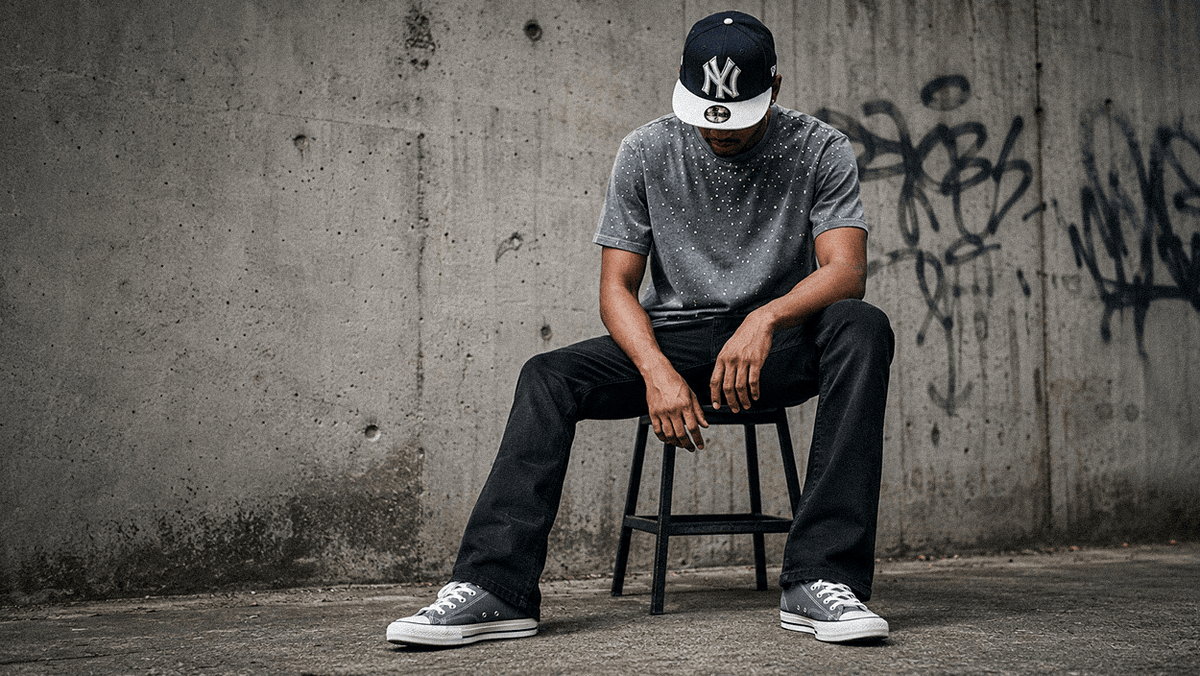
In order to get a pair you really didn't need to be playing in the NBA, they were for everyone and they were designed to mix & match with every fit. You could wear Jordans with baggy jeans, a jersey, a graphic tee or a hoodie and it always worked because they carried enough history on their own to become the focal point of the fit.
And this is where air jordan fashion really started to take shape, these kicks did come from basketball but their purpose had changed.
One day they could be performance sneakers and the next part of a streetwear fit.
Jordan Brand Becomes Its Own Thing
The Jordan line by 1997 had now become way too big to remain just a signature collection, and so Nike established the Jordan Brand as its own division which allowed the Jumpman enough room to expand into footwear, fit and other products while developing its own identity within Nike.
This was exactly the point where Jordan became more than Michael Jordan's sneaker line.
It became a BRAND.
Jordan brand could now work with other athletes, create different types of footwear and build products that weren't directly connected to MJ's numbered game sneakers.
The Jumpman itself was more than recognizable to stand on its own and that is one of the biggest reasons why jordan brand sneakers still have such a strong identity today.
The Retro Era Kept the History Alive
One of the smartest strategies of Jordan has been bringing classic models back so that the newer generations can experience designs that were originally created decades ago. The jordan retro sneakers releases allowed many who weren’t even born during when Michael Jordan was winning championships to still walk into a store and buy an Air Jordan 1 or Air Jordan 3 or Air Jordan 4 or Air Jordan 11 connected to that era. Whereas for the ones who lived that era, it allowed them to collect and reminisce about the Golden Era.
You know that is really unusual in fashion because trends come and go all the time, they get replaced but Jordan kept bringing its history forward and continued growing.
A classic colorway could return, get worn by a completely new generation and suddenly become part of current jordan sneaker culture all over again.
This is why certain Jordan releases continue to mean something even when they're no longer new.
Each and every single one carries a piece of the story with it;
The Chicago colors on an AJ1 aren't just red, black and white.
The Black Cement AJ3 isn't just another black-and-gray sneaker.
The Concord AJ11 isn't just a basketball sneaker with patent leather.
They are what defined the era and Jordan a brand.
|
Air Jordan 1 Retro OG "All Star" |
Air Jordan 3 Retro "True Blue" |
Air Jordan 11 Retro ‘Pearl’ Pre School |
 |
 |
 |
Why Jordan Still Works in Streetwear
If you have been looking at Jordan from a fashion perspective, then this is the part that matters. We have already established that Jordan kicks are steeped in history & legacy but the way they are designed makes them extremely easy to style.
For example; a Air Jordan 1 can work with relaxed denim and a tee.
Jordan 4s can fit easily and naturally with cargos and an oversized hoodie whereas the Low-top Jordans can work with shorts when you want something more casual.
This is the reason why Jordan has managed to stay relevant throughout these years with so many changes in streetwear. They don’t require you to dress a certain way but instead they make it relatively easier for you where you can build your entire fit around them and or use them as the finishing piece.
They literally elevate your style and outfit because their silhouettes are already so distinct and recognizable.
The Jordan Legacy Isn't Going Anywhere
Even though Michael Jordan retired from basketball a long time ago, his sneakers never really left the scene, they continued to dominate streetwear fashion and influence generation after generation.
Jordan Brand now covers performance basketball, lifestyle footwear, fit and retro releases. It has continued to introduce new collaborations and designs while keeping its most recognizable models in rotation.
The beauty of it all is that the older sneaker fans remember the original releases whereas younger fans discover the retros and those who don't even follow basketball at all can still recognize the Jumpman and enjoy the cool styles that are offered.
This is a super unlikely thing for a sports brand, it is really rare.
Basically the story behind air jordan shoes isn't simply that Michael Jordan was one the greatest basketball players ever, if not the greatest and got a successful sneaker deal but it's got more to do about the fact that his partnership with Nike changed what a basketball sneaker could represent.
It could be performance equipment.
It could be fashion.
It could be part of music and street culture.
It could be something you collect.
And, decades later, it could still be something you want to wear.
This is the real story behind Jordan Brand.
Frequently Asked Questions (FAQs)
1. When did the first Air Jordan come out?
Air Jordan 1 was released in 1985, designed by Peter Moore. The original black and red version retailed for $65.
2. Was the Air Jordan 1 actually banned?
It's complicated. The Nike Air Ship first drew the NBA's attention, while Nike later used the controversy to build the famous “Banned” story around the AJ1.
3. Who designed the Air Jordan 3?
Tinker Hatfield designed it, introducing details like elephant print and visible Air cushioning.
4. When did Jordan Brand become its own brand?
Nike established Jordan Brand as its own division in 1997, expanding beyond Michael Jordan's signature shoes.
5. Why are Jordan 1s still so popular?
The history helps, but they're also easy to style with jeans, cargos, shorts, sweats and more.
6. Are Jordan sneakers still made for basketball?
Yes. Jordan Brand still makes performance basketball shoes alongside lifestyle and retro releases.
7. Can you wear Jordans with streetwear?
Absolutely. AJ1s, AJ3s and AJ4s work great with relaxed denim, cargos, hoodies and oversized tees.
8. Why is the Jumpman logo so important?
It gave Jordan its own identity beyond the Nike Swoosh. It first appeared on the Air Jordan 3 and became an iconic part of sneaker culture.


Leave a comment
All comments are moderated before being published.
This site is protected by hCaptcha and the hCaptcha Privacy Policy and Terms of Service apply.